The Buy-and-Build Leadership Dilemma
When Loyal Operators Face the Demands of Scale
In the quiet deliberations of the boardroom, few questions prove more consequential—or more uncomfortable—than this: Is the leader who built this organization capable of scaling it? This briefing examines the structural leadership challenge confronting CEOs and investors pursuing buy-and-build strategies, drawing on a recent Operations Head assessment to illustrate why the answer is so rarely easy to find.
THE ARCHITECTURE OF LOYALTY
In the early stages of a company’s life, roles are forged by necessity. Decisions move fast, resources are constrained, and organizational success rests disproportionately on individuals who show up, solve problems, and sustain momentum without requiring elaborate direction. In these environments, the Operations Head becomes indispensable—not merely competent, but foundational. They learn the business from the inside out. They carry institutional memory that no document can replicate. They earn, over the years, the deepest form of professional trust.
This is not a minor thing. In founder-led businesses, the relationship between the CEO and a trusted operational leader is often the structural load-bearing wall of the enterprise. Remove it carelessly, and you may find that more was resting on it than anyone recognized.
But the moment a company begins contemplating a buy-and-build strategy—the deliberate acquisition and integration of multiple businesses into a coherent, value-creating platform—the definition of operational leadership shifts. Not in ways that are immediately obvious. Not in ways that show up on quarterly performance reviews. But in ways that will become unavoidable the moment the first acquisition closes.
The leader who built the organization to this point may not be the leader equipped to build the organization that must now emerge.
WHAT THE ASSESSMENT REVEALED
Recently, we conducted a Buy-and-Build Fit-for-Role Assessment for the Operations Head of a company on the cusp of platform formation. The individual’s standing within the organization is unambiguous. Respected by peers and trusted implicitly by the CEO. Under their oversight, operational discipline is high, issues surface and are resolved quickly, and the internal culture reflects stability rather than anxiety.
These are not trivial achievements. They represent years of deliberate effort and genuine organizational contribution.
Yet when the role was evaluated through a buy-and-build lens—the lens of what the organization will require in 18 months, not what it has required to date—a different picture emerged.
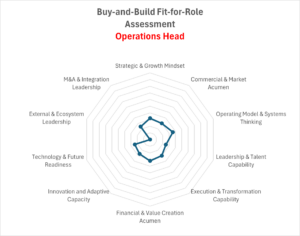
Figure 1: Buy-and-Build Fit-for-Role Assessment — Operations Head
The radar chart above is not a performance appraisal. It is a strategic capability map. It reveals not where the individual has failed, but where the gap lies between the capabilities that enabled yesterday’s success and those that will determine tomorrow’s. The areas registering lower scores are, without exception, precisely the areas that a scaling acquisition strategy places under the heaviest load: strategic and growth mindset, operating model and systems thinking, financial and value creation acumen, and integration leadership.
These are not peripheral competencies in a buy-and-build environment. They are the architecture of the role itself.
THE TWO STAGES OF OPERATIONAL LEADERSHIP
To understand why this gap matters, it helps to think clearly about the two fundamentally different forms that operational leadership takes across a company’s growth trajectory.
In what we characterize as Stage 1—the founder-led, single-entity business—operational excellence means keeping the machine running smoothly. Processes are reasonably well understood. Decisions are centralized. The scale of coordination required within the organization remains humanly manageable. An outstanding Stage 1 Operations Head masters the art of execution within a defined system.
Stage 2—the platform formation stage, where acquisitions begin and a group of distinct businesses must be orchestrated as a coherent whole—demands something categorically different. The Operations Head is no longer managing a system. They are designing one. Instead of executing processes within a single organization, they must architect processes that span multiple entities, each with its own culture, legacy infrastructure, and operational logic.
Integration is no longer a project. It becomes a permanent organizational capability. The extraction of operational synergies—the primary mechanism through which buy-and-build strategies generate value—requires a leader who can hold complexity in mind at a systems level while simultaneously managing the disruptive reality of what acquisitions actually feel like from the inside.
The skills required to operate a $10 million business efficiently are not merely a smaller version of the skills required to integrate and scale a group of businesses reaching $100 million. They are different in kind, not just degree.
This distinction matters enormously because it reframes what leaders and boards are actually evaluating. The question is not whether the existing Operations Head is good. The question is whether the cognitive orientation required for Stage 2 leadership—what might be called operational architecture thinking—is something this individual either already possesses or can develop within the time the strategy allows.
THE FOUR STRATEGIC RESPONSES
The binary framing that CEOs most commonly reach for—retain or replace—is almost always the wrong starting point. It collapses a genuinely complex organizational question into a personnel decision, and in doing so, it misses most of the available strategic options. In practice, organizations facing this dilemma have four distinct pathways.
The first is deliberate capability development. When the individual demonstrates high learning agility, genuine appetite for growth, and the cognitive flexibility to expand into systems thinking, investment in their development—through mentorship, exposure to integration work, and structured stretch assignments—can close the gap. This path takes time. It requires a thorough assessment of whether time is available. But when it succeeds, it preserves the institutional trust that took years to build while equipping the organization for what comes next.
The second is role redesign. As organizations scale through acquisitions, it frequently becomes operationally unrealistic for a single individual to carry both the execution mandate and the architecture mandate simultaneously. The role may be split: one leader responsible for day-to-day operational discipline across the growing group; another responsible for integration design, transformation, and operating model development. This is not a demotion. It is an organizational acknowledgment that the scope has outgrown any single person.
The third is complementary leadership—introducing an experienced integration or transformation executive above or alongside the existing Operations Head. This model is well-established in private equity, where seasoned operators are frequently deployed to guide the integration and scaling process while the incumbent leader continues to anchor operational stability. It allows the organization to retain what is working while importing the absent capabilities.
The fourth is full replacement. This becomes appropriate when the capability gap is structural rather than developmental, and when the individual shows neither appetite nor capacity for evolving the role required. Even then, the decision carries real organizational cost. Leaders who have built companies to their current stage have often shaped the culture, the team, and the institutional identity in ways that extend far beyond their formal role. Departures of this kind, if not handled with genuine care, can trigger broader destabilization.
THE DIMENSION THAT STRATEGY DOCUMENTS OMIT
What makes this dilemma genuinely difficult—what distinguishes it from most organizational design questions—is its emotional architecture. Founders and CEOs who have built businesses alongside a trusted operational partner carry a form of loyalty that is not irrational. It is the natural accumulation of shared risk, shared sacrifice, and shared achievement.
To be told that the person who helped build the company may not be suited to lead it through its next chapter is experienced not merely as a strategic observation, but as something closer to a judgment on the relationship itself. Many CEOs avoid the conversation precisely because it feels like a betrayal of history rather than a navigation of the future.
This avoidance is understandable. It is also extremely expensive at scale. Organizations that decline to address leadership architecture misalignment during buy-and-build execution do not escape the consequences. They defer them—until the acquisition integration falters, the synergies fail to materialize, and the complexity that acquisitions create overwhelms a leadership structure designed for a simpler world.
Many companies fail in buy-and-build not because the acquisitions were poorly chosen, but because the organization was never equipped to manage the complexity those acquisitions created.
THE CHAIRMAN’S QUESTION
For boards and investors overseeing buy-and-build strategies, the assessment framework we have described offers a more useful starting point than the conventional talent review. The question is not whether individual leaders are performing well against their current job descriptions. The question is whether the organization’s leadership architecture is being designed with the future scale of the business in mind.
This distinction has practical implications. Leadership capability assessments should be conducted before the first acquisition, not after. Role architectures should be designed around the platform that is being built, not the single business that currently exists. And the conversations about leadership evolution—with the individuals concerned, and with the board—should happen early enough that all the strategic options remain available.
Because by the time an integration is struggling and synergies are three-quarters behind plan, the question of whether to retain, develop, redesign, or replace is no longer strategic. It is a crisis response. And the range of choices available has narrowed considerably.
The most dangerous assumption in buy-and-build is not a mispriced acquisition or an overestimated synergy. It is the assumption that the leadership structure that carried the organization to this point will automatically carry it forward—that continuity of personnel is equivalent to continuity of capability.
It is not. And recognizing that distinction, clearly and early, is one of the most consequential acts of strategic leadership available to any chairman or CEO navigating a platform formation strategy.
About This Assessment
The Buy-and-Build Fit-for-Role Assessment evaluates senior leaders across ten strategic capability domains calibrated to the demands of platform formation and scaled integration. The radar chart presented in this briefing reflects an actual assessment conducted for an Operations Head preparing for Stage 2 growth. All identifying information has been removed.
Where This Conversation Can Go Next
The ideas discussed here are part of the work we do at Fifth Chrome through SCALEUP and our Buy-and-Build Operating System — designed for leaders who are serious about building businesses that can scale, integrate, and compound.
If this resonates and you believe a deeper conversation would be valuable, you can reach us at scaleup@fifthchrome.com or buyandbuild@fifthchrome.com.
About Fifth Chrome
At Fifth Chrome, we specialize in helping companies unlock unprecedented opportunities through M&A, buy-and-build, scaling up, and leadership strategies. Whether you’re a Fortune 500 company, a mid-cap, or an SME, our expertise in M&A integration, leadership development, and strategic advisory services can help you achieve scalable growth with precision and speed.
Contact Us
Visit us at fifthchrome.com for more information on our services or to schedule a consultation.
Ready to Go Deeper?
Do you want to dive deeper into the stages of growth, their corresponding structures, leadership styles, and operational models?
Then this book might be for you: Buy-and-Build Operating System Volume 1, available on all Amazon sites globally.
Visit Amazon in the US, UK, DE, FR, ES, IT, NL, JP, BR, CA, MX, AU, PL, SE, BE, IE, or IN to get your copy today.